Dry Gulch Oilfield (Minnelusa Formation) central Powder River Basin, Wyoming, USA (ca. 5million barrels)
Western Flank oilfields, Cooper - Eromanga Basin, Australia.
Brur, Heletz and Kokhav oil fields, Israel: Overall field response pattern including local depletion and remaining undrained areas.
Chiya Khere - major new Zagros Deformed Belt oilfield in Kurdistan, currently being developed by Taqa
Huron Oilfield and adjacent undrilled prospect, Llanos Deformed Belt, Colombia. Note - two nearby off anomaly dry holes.
Scotforth Products
Hydrocarbon Lead Indicator ("HLIs") Surveys and Prospectivity Assessments
Prospect and Acreage Targeted
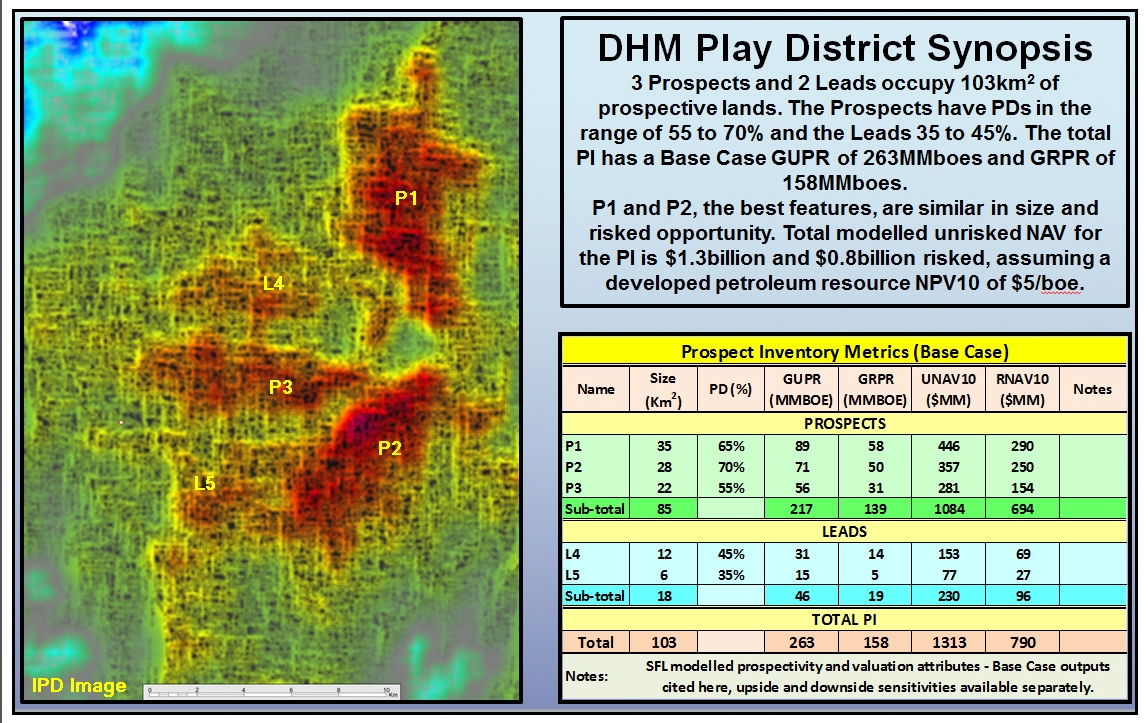
Revised Exploration Risks and HLI-Modelled Petroleum Resource Potential
Strategic Upgrading of Conventional Prospect Inventories
Available Globally Onshore